




Share Item
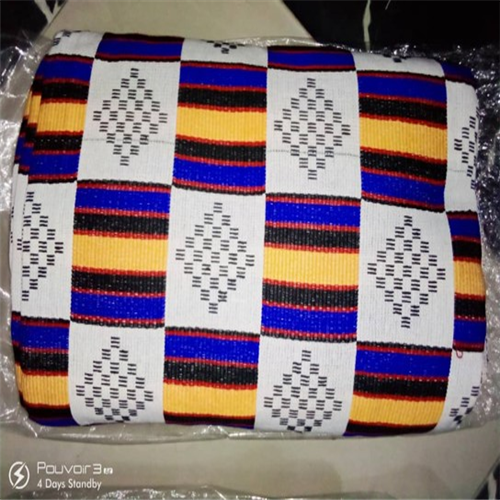
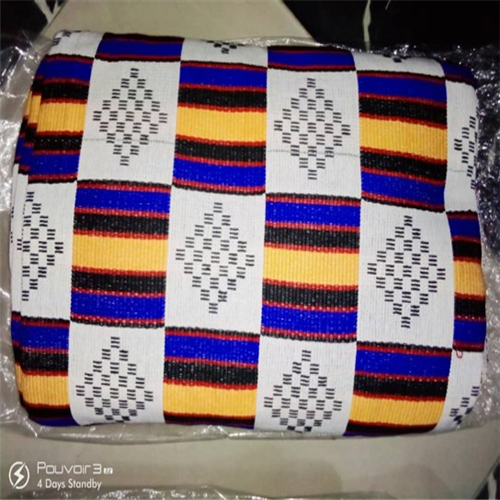
The fabric for the cloth was made during the 1950s or 1960s on a men's double-heddle loom, on which long narrow strips of fabric are woven; these are then sewn together to make larger pieces of cloth. This kente style cloth, which is probably made of cotton with some rayon, consists of narrow multicoloured strips ornamented with supplementary weft patterning. Cotton is commonly used in narrow-band weaving. While hand spun cotton was traditionally used, today imported and local commercial yarns are more often used.
This cloth reproduces the narrow-band weaving of the Ashanti and Yoruba people. Ewe weavers increasingly reproduce this style, as kente is a very popular form of cloth, and sells well. Ashanti kente cloths are distinguished from other male weaves by their use of bright colours and bold and complex patterns. Ewe reproduction kente cloths, on the other hand, use more sombre and cooler colours, such as black, brown, green and dark blue, with less formal decoration. Combinations of bright and sombre colours are also seen and it can be difficult to distinguish Ewe kente from Ashanti kente. Ewe kente cloths are worn in the same manner as Ashanti kente, that is, in toga form. In Ewe, cloths are representative of a man's prosperity and have an important social status.
.jpg)
.jpg)
.jpg)
.jpg)
.jpg)
.jpg)
.jpg)
.jpg)
.jpg)
.jpg)
.jpg)
.jpg)


