




Share Item
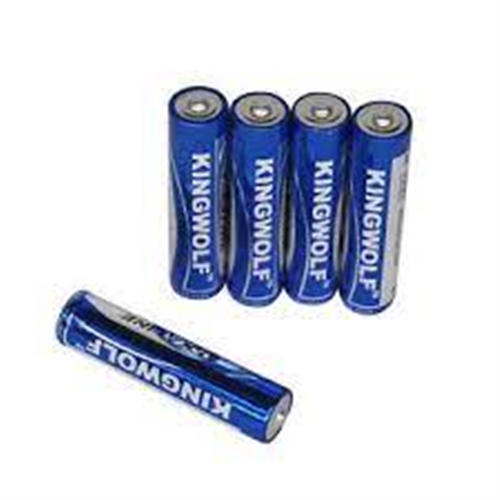
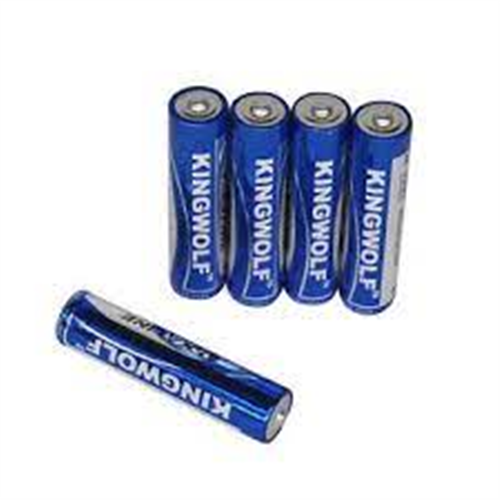
KINGWOLF R3 ALKALINE BATTERY
10 PACKS OF 4 INSIDE
LONG DURATION
Rechargeable alkaline cells are constructed very similarly to disposable alkaline cells. A cathode paste is pressed into a steel can that forms the positive terminal of the battery. The negative electrode consists of zinc powder suspended in a gel, with a steel nail contact that runs to the base of the cell to form the negative terminal. Features of the rechargeable alkaline that differ from a disposable alkaline cell include the presence of barium sulfate or other additives in the cathode mix, which improve cycling and increase capacity by preventing the formation of insoluble manganese compounds. The cathode also has a catalyst to recombine any hydrogen that forms; hydrogen is produced as the fine zinc grains created during recharge are corroded by the electrolyte. Zinc oxide is added to the cathode mix to reduce generation of hydrogen gas; the zinc oxide dissociates on charge to form oxygen. The separator between anode and cathode is formulated to be particularly resistant to growth of zinc grains, which could penetrate and short-circuit the cell.
The cells are manufactured in the charged state, ready to use.
Although these batteries can be used in any device that supports a standard size (AA, AAA, C, D, etc.), they are formulated to last longest in periodical use items. This type of battery is better suited for use in low-drain devices such as remote controls or for devices that are used periodically such as flashlights (torches), television remote control handsets, portable radios, etc. If they are discharged by less than 25%, they can be recharged for hundreds of cycles to about 1.42 V. If they are discharged by less than 50%, they can be almost fully recharged for a few dozen cycles, to about 1.32 V. After a deep discharge, they can be brought to their original high-capacity charge only after a few charge-discharge cycles.
.jpg)
.jpg)
.jpg)
.jpg)
.jpg)
.jpg)
.jpg)
.jpg)
-SV6800-100-Copper(1).jpg)
.jpg)
.jpg)
.jpg)


